


Understood: Support ADHD Kids
4.4158.00 Reviews
App Specs
- Version
- 2.20
- Updated On
- License
- Free
- Downloads
- 50,000+
- Developer
- Understood for All, Inc.
- Categories
- Parenting
- Platform
- Android
Screenshots
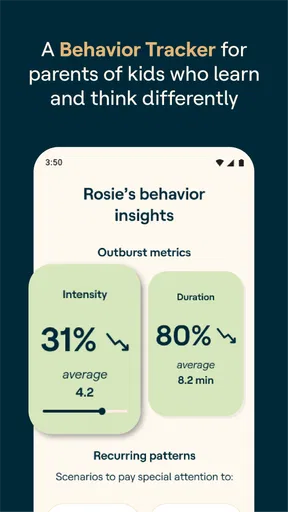
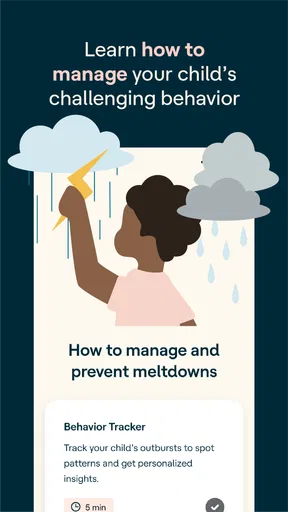
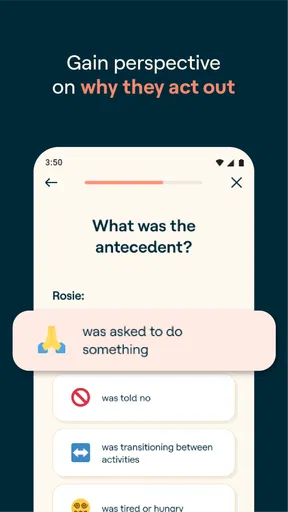
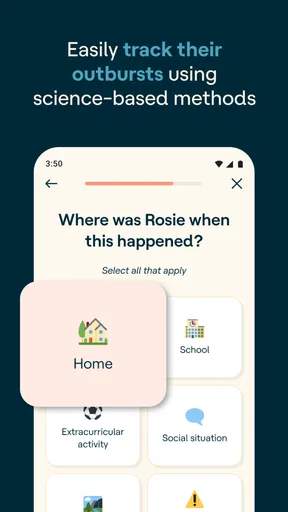
 Analysis by AppCompare
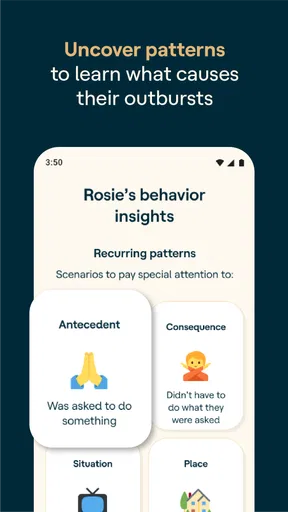
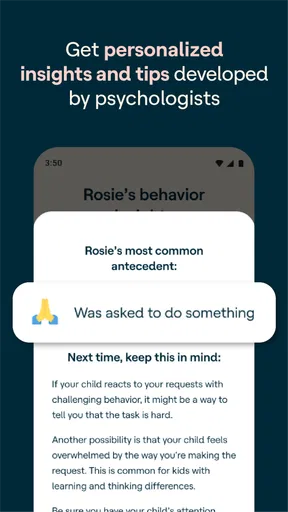
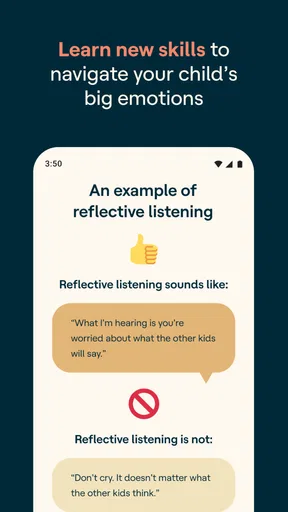
Parenting a child with ADHD often means trying to remember patterns while dealing with the immediate problem in front of you: a rushed school morning, an unfinished routine, a difficult transition, or an evening that suddenly goes off track. Understood: Support ADHD Kids takes a practical approach to that pressure. It is a free parenting app from Understood for All, Inc., designed around behavior tracking and developed by psychologists for parents of children with ADHD.
I found its main value in turning vague impressions into something easier to discuss. Instead of relying only on “this week was hard,” I can use a structured record to think about what happened, when it happened, and whether a strategy seemed helpful. That does not replace professional guidance, and it certainly does not make parenting predictable, but it can give a family a more useful starting point for the next conversation.
From a difficult moment to a clearer record
The most realistic way to use this app is not to open it expecting an instant solution. I would start after noticing a repeated concern: perhaps homework regularly stalls, getting dressed takes too long, or a child struggles whenever an activity changes. The first important decision is to choose one behavior or routine rather than trying to document everything at once.
That narrow focus matters. If I track school refusal, sibling arguments, bedtime resistance, and lost belongings together, the record quickly becomes too broad to interpret. A better workflow is to choose the concern that is causing the most daily friction, record it consistently, and use the resulting picture to decide what deserves attention next.
The app’s purpose is especially clear for parents who feel that their notes are scattered across text messages, calendars, and memory. A behavior tracker gives those observations a common place. I can return to it after the moment has passed, when I am less frustrated and more able to describe what actually occurred.
That pause is one of the quiet strengths of this kind of tool. In the middle of a conflict, a parent may remember the emotional intensity more strongly than the sequence of events. Reviewing a record later encourages a more balanced question: what happened before the behavior, what did the child do, and what followed?
A simple workflow works better than constant logging
I would use the app at predictable points rather than checking it continuously. A short entry after school, after a challenging transition, or before bed is more realistic than trying to record every small incident. The goal is not to create a perfect diary. The goal is to collect enough consistent information to notice a pattern.
Worth Reading Before You Choose

EA SPORTS FC Mobile 26 Is a Bigger Football Game, but It Takes Time

Flipboard Shows What News Apps Must Do Beyond the Feed

Switching to Android Auto Means Rethinking Your Driving Routine

Google Calendar Makes a Crowded Week Easier to Manage

Ludo King Makes the Most of the Minutes Between Plans

Baby Panda World Brings Quick Play to Modern Phones, but Its Game Library Feels Busy
For example, imagine a child who repeatedly abandons homework. On Monday, I might note that the work began immediately after a tiring school day. On Tuesday, I might record whether a snack, a short break, or a quieter place changed the start of the routine. By the end of several attempts, the useful question is no longer simply whether homework was completed. It becomes whether the timing, environment, or first instruction affected the outcome.
The most useful habit is recording context, not just failure. A parent should note what made a routine easier as well as what made it difficult. Otherwise, the tracker can become a catalogue of problems and miss the small adjustments that are worth repeating.
This is also where I would resist the temptation to treat every entry as a verdict on the child. The record describes a moment and its circumstances; it does not define personality, effort, or ability. That distinction is important when the app is used during stressful weeks.
Turning observations into a practical experiment
Once a concern has been selected, I would change only one part of the routine at a time whenever possible. If homework is the issue, changing the location, timing, instructions, reward system, and adult support all at once makes the outcome difficult to understand. A tracker is more useful when it supports small experiments rather than a complete household overhaul.
One week might focus on giving a single instruction instead of several. Another might focus on beginning earlier, before fatigue builds. The point is not to prove that one technique works universally. It is to help the parent see whether a particular adjustment deserves another try.
This approach is a non-obvious advantage over ordinary notes. A notebook can capture events, but a structured tracking routine encourages comparison. It helps me separate a strategy that worked once because circumstances were unusually calm from one that appears helpful across several similar situations.
There is a trade-off, though. The more detail I try to capture, the more likely I am to stop using the app. Parents should choose the smallest amount of information they can maintain honestly. A brief, regular record is more valuable than an elaborate system abandoned after three days.
How the information travels between home, school, and care
The next stage is the handoff. ADHD-related behavior rarely belongs to one setting, yet each adult may see a different version of the same difficulty. At home, a child may struggle to start chores. At school, the concern may appear as incomplete work or missed instructions. A clinician may need a concise description of the pattern rather than a long emotional explanation.
Understood: Support ADHD Kids can help a parent prepare for those conversations by making observations easier to organize. I would not treat the app as a shared communication system unless the people involved have separately agreed on how information should be passed along. Its practical role is to help the parent arrive with clearer examples and better questions.
Before a school meeting, I might review several entries and identify two things: the behavior I want to discuss and the circumstances that seem connected to it. That is more productive than presenting a general complaint such as “nothing is working.” I can instead say that transitions after lunch appear especially difficult, or that a shorter first instruction seems to help at home.
The same preparation can make a clinical appointment more efficient. A parent may want to ask whether the observed pattern is worth monitoring further, whether a routine should be adjusted, or whether another concern needs assessment. The app does not make that decision, but it can help the parent describe the question without depending entirely on memory.
For co-parents, consistency is another important handoff. If two adults use different definitions of success, the record becomes harder to interpret. One person may count a routine as successful only when it is completed independently, while the other counts it as successful when the child begins after one reminder. Agreeing on the target before tracking prevents unnecessary disagreement later.
What a useful result looks like
The result I would expect from regular use is not a clinical conclusion or a guaranteed behavior change. It is a clearer working picture. I may learn that a problem is concentrated at a particular time, that one type of instruction creates less resistance, or that a strategy helps only when the child is rested.
That kind of result can change the next action. Instead of adding more consequences, I might simplify the first step. Instead of assuming a child is refusing, I might ask whether the task is unclear or too large. Instead of reporting a week as uniformly bad, I can identify the moments that went better and examine what was different.
This makes the app most valuable as a reflection tool. It supports the parent’s judgment rather than pretending to replace it. I appreciate that distinction because behavior tracking can easily become overly mechanical when families are looking for certainty.
A realistic outcome might be a more focused conversation with a teacher, a better-prepared appointment, or a calmer decision about which routine to address next. Those are modest results, but they can have a meaningful effect on how a family spends its energy.
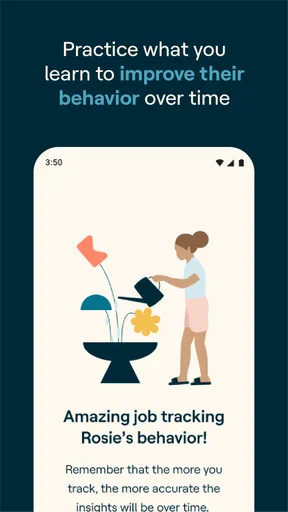
The app may also help parents notice progress that is easy to overlook. Improvement is not always a completely smooth routine. A child might recover more quickly after a difficult transition, need fewer reminders, or start a task with less adult prompting. If the record captures only completion versus non-completion, those intermediate gains disappear.
Where the process becomes uncomfortable
The biggest friction is the work required from the parent. Tracking asks for attention at exactly the time when attention is already limited. After a difficult evening, opening an app and writing an accurate entry may feel like another task. If the system is too demanding for the family’s schedule, the quality of the record will decline or use will stop.
There is also a risk of over-monitoring. A parent who records every small behavior may begin watching the child through the lens of the tracker instead of participating in the moment. I would set a clear boundary: track the selected routine during a defined period, then step back and review. The app should support family life, not turn the whole day into an assessment.
Another limitation is interpretation. A pattern in a behavior log can suggest a useful question, but it cannot establish why the behavior occurs. Sleep, anxiety, learning difficulty, sensory needs, family stress, and classroom demands can overlap with ADHD-related challenges. A record may show that mornings are difficult; it cannot, by itself, explain the full reason.
Parents should also be careful with comparisons. A child’s entries are most useful against that child’s own previous experiences, not against another family’s expectations. ADHD affects children differently, and a strategy that looks effective in one home may be unsuitable in another.
For families already using a detailed behavior plan with a clinician, the app may be helpful as a convenient companion, but it should not automatically replace the agreed process. A professional may want specific information, a particular observation period, or a different definition of progress. The best use is to align the app with that plan rather than creating a competing system.
Who will benefit, and who may prefer something else
I see this parenting app as a good fit for someone who wants a gentle structure for observing ADHD-related behavior without committing to a complicated productivity system. It is especially suitable for a parent who often leaves appointments thinking, “I wish I had written that down,” or who notices patterns but cannot explain them clearly later.
It can also suit families at the beginning of a new routine. When a child starts a different school schedule, a parent introduces a new homework approach, or the household is trying to reduce conflict around transitions, a focused record can show whether the change is helping.
I would be more cautious about recommending it to a parent who wants automatic analysis, extensive scheduling, or a full family-management platform. A general calendar, shared task app, or dedicated clinical system may be better when the main need is assigning chores, coordinating appointments, or sharing live updates between several caregivers.
It may also be the wrong choice for someone who finds tracking emotionally exhausting. There is no benefit in forcing a parent to document behavior if the process increases guilt or tension. In that situation, a few handwritten prompts for a professional conversation could be more sustainable than maintaining an app-based record.
The app is free, which removes an important barrier for families who want to try a structured approach without adding a subscription decision. Its content rating is Teen, and it requires an operating system of version 10 or later. Those practical details are worth checking before installation, especially on an older device used by a parent or caregiver.
What to know before installing
Understood for All, Inc. released the app on May 16, 2023, and the current version is 2.20. Its audience is reflected in its Parenting category and its Teen content rating, while its store presence shows a 4.4 average from over 500 ratings and more than 50K installs. I read those figures as signs of a focused tool with a meaningful user base, not as proof that it will suit every household.
The short store label is simply “Understood,” so I would pay attention to the full app name when searching. That avoids confusing it with unrelated parenting resources or assuming it is a general child-development tracker. Its identity is specifically tied to supporting parents of children with ADHD.
Before relying on any record for a meeting, I would review the entries and rewrite the main takeaway in ordinary language. A list of incidents is less useful than a short summary of the pattern, the strategy tried, and the question that remains. This extra step is important because professionals and co-parents usually need the conclusion first, followed by a few examples.
I would also decide in advance how long to test a routine. Without a stopping point, tracking can continue indefinitely without producing a decision. A defined review moment helps answer whether to continue the strategy, adjust it, discuss it with someone else, or stop tracking that particular behavior.
My overall experience with the approach
What I like most about Understood: Support ADHD Kids is its restraint. It does not need to solve every parenting problem to be useful. Its strongest role is helping a parent move from a stressful impression to a more organized observation, then from that observation to a better conversation or a small, deliberate change.
The main weakness is equally straightforward: the benefit depends on the parent’s consistency and judgment. The app cannot remove the effort of noticing context, and it cannot turn a behavior record into an answer without thoughtful interpretation. Families expecting instant recommendations or automated diagnosis will likely be disappointed.
For me, the deciding question would be whether I need a focused behavior-tracking companion rather than a broad household organizer. If the answer is yes, this free app is worth trying with one routine, a modest tracking habit, and a clear review point. Used that way, it can make difficult days easier to describe and small improvements easier to recognize.
I would recommend it to parents who want practical evidence for their own reflection or for conversations with teachers and professionals, while keeping expectations realistic. Its best outcome is not a perfect behavior chart; it is a clearer next step for the family.
Pros
- Practical tools help children understand attention and focus challenges.
- Kid-friendly activities can make difficult topics easier to discuss.
- Supports parents and caregivers with guidance for everyday situations.
- Encourages positive routines rather than focusing only on symptoms.
- Simple design makes key information accessible for younger users.
Cons
- Some advice may feel too general for children with complex needs.
- Content may not replace personalized guidance from a qualified professional.
- Younger children may need an adult to explain and use the material.
- Limited usefulness if the child does not engage with the activities.
- Support and content availability may vary by language or region.
FAQs for Understood: Support ADHD Kids
What is Understood: Support ADHD Kids, and who is it designed for?
Understood: Support ADHD Kids is an educational and support app created for parents, caregivers, and educators helping children with ADHD and other learning or thinking differences. It offers practical information, guidance, and tools intended to make everyday routines, schoolwork, communication, and emotional support easier to manage. It is not designed to replace professional medical, psychological, or educational advice.
What kind of content and tools does the app provide?
The app typically focuses on practical strategies for understanding ADHD-related behaviors and supporting children at home or in school. Depending on the available version, users may find articles, expert guidance, personalized recommendations, activity ideas, checklists, and resources for topics such as attention, organization, emotional regulation, homework, and routines. The content is intended to be accessible for families rather than written only for specialists.
Can Understood: Support ADHD Kids diagnose ADHD or provide medical treatment?
No. The app should not be used to diagnose ADHD or any other condition, and it does not provide medical treatment. Its information is intended for education and general support. If a child is experiencing persistent difficulties with attention, behavior, learning, sleep, or emotional wellbeing, parents should speak with a qualified healthcare professional, psychologist, or school specialist for an appropriate assessment and individualized recommendations.
Is the app suitable for teachers and caregivers as well as parents?
Yes, the resources can be useful for anyone who regularly supports a child with ADHD or learning differences, including teachers, tutors, relatives, and caregivers. The suggested strategies may help adults create clearer instructions, predictable routines, and supportive learning environments. However, every child responds differently, so users should adapt the recommendations to the child’s age, needs, school requirements, and guidance from qualified professionals.
Is Understood: Support ADHD Kids free to download, and does it require an account?
Availability, pricing, and account requirements may vary depending on the platform, region, and current app version. Before downloading, check the Google Play Store or Apple App Store listing for information about free features, optional subscriptions, in-app purchases, privacy terms, and supported devices. If registration is requested, review what personal or child-related information is collected and adjust permissions carefully before using the app.


